
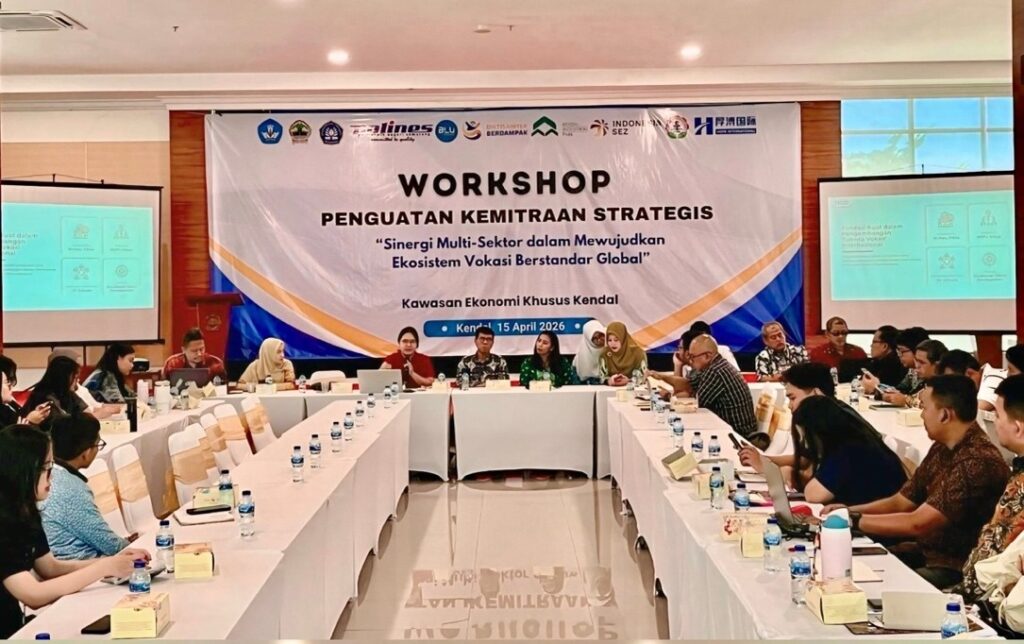
Kendal, April 15, 2026 — Semarang State Polytechnic (POLINES) together with the Kendal Special Economic Zone (KEK) held Workshop on Strengthening Strategic Partnerships: Multi-Sector Synergy in Realizing a Global-Standard Vocational Ecosystem at the Kendal Special Economic Zone (KEK) on Wednesday (April 15). This activity marks an important milestone in strengthening collaboration between vocational education, local governments, industrial areas, and international partners.
The workshop was officially opened by the Director of POLINES, Dr. Garup Lambang Goro, ST, MT, who in his remarks emphasized that the partnership with KEK Kendal is not merely an administrative collaboration, but a long-term commitment to placing Indonesian vocational graduates in an industrial environment with international export standards.
The forum featured four speakers from different, complementary domains. Puput Handayani, Head of HR at PT Kawasan Industri Kendal (KIK), presented a map of the Kendal Special Economic Zone (KEK) workforce needs for 2026, including the most needed qualifications, competency standards for multinational tenants, and official recruitment channels open to vocational graduates.
Dr. Ir. Kurnianingsih, ST, MT, Deputy Director of Cooperation, Public Relations, and Information Systems at POLINES, explained POLINES' programs and readiness to meet these needs, including the MBKM internship program, industry-based curriculum development, microcredentials, and the achievements of the collaboration since the signing of the MoU between POLINES and KIK in April 2025.
The policy perspective was delivered by Robberto Agung Nugroho, Head of Vocational High School Education Division of the Central Java Provincial Education Office, who in this case was represented by Andang Fitriadi, who serves as Head of the Vocational High School Section (Kasi) at the Branch Office of the Education Office (Cabdin) Region II of Central Java Province, who outlined the direction of Central Java's vocational policy and the importance of synergy between vocational high schools, vocational colleges, and strategic industrial areas such as the Kendal Special Economic Zone in reducing the number of educated unemployed.
The discussion horizon was broadened by Wahyu Widyasari Sandhy, International Relations Manager of HOPE Internasional, who introduced the 2+1+1 and 1+1+1 programs as vocational internationalization schemes, opening a path for POLINES students to undertake part of their study and internship abroad with world-class work standards.
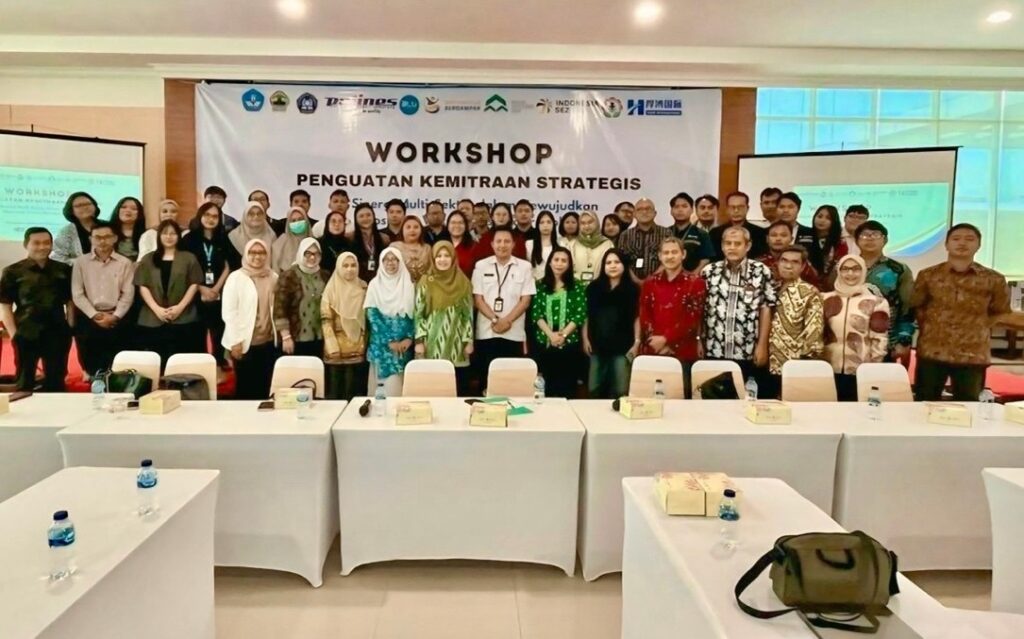
A historic moment in the workshop was the handover of souvenirs symbolizing the commitment to cooperation between three pairs of partners: POLINES and the Kendal Special Economic Zone (KEK), POLINES and HOPE International, and the Central Java Provincial Education Office and the Furniture and Wood Processing Industry Polytechnic. This ceremony took place in the same forum, emphasizing that the vocational ecosystem being developed is multi-stakeholder, not merely bilateral.
Present at the workshop were Prof. Dr. Ir. Dwiana Hendrawati, ST, MT (Deputy Director of Academic Affairs at POLINES), POLINES structural staff and lecturers. The question and answer session, which lasted more than 45 minutes, reflected the high enthusiasm of all participants. The discussion touched on concrete issues: what types of technical competencies are most needed by Kendal SEZ tenants in the next two years, how POLINES can adapt its curriculum quickly and measurably, and what kind of collaboration model is most effective between the Central Java Education Office, vocational schools, and vocational colleges.
The choice of the Kendal Special Economic Zone (SEZ) as the workshop location is significant. As an internationally recognized special economic zone hosting more than 90 companies from 32 countries with total investments exceeding USD 2 billion, the Kendal SEZ represents the need for renewable and sustainable vocational talent. POLINES, located less than 30 km from the area, has the potential for long-term collaboration between the two countries, which is considered strategic and mutually beneficial.
This workshop is part of a series of implementation of the POLINES and KIK MoU which will be signed on April 28, 2025, and is clear evidence that the partnership built does not stop at the signing ceremony, but continues to develop into a strategic forum involving cross-sector stakeholders.